Community & friendships17 November 2026 · 4 min read
We’re wired to connect: what happens when we don’t?
Across 148 studies, people with stronger social ties had about 50% higher odds of being alive at the end. The encouraging part: small, regular contact helps, and other people are usually more open to it than we think.

The short answer
Loneliness isn’t just unpleasant, it’s linked to your health. A review of 148 studies with more than 300,000 people found that people with stronger social relationships had about 50% higher odds of surviving the study period than people with weaker ones. The good news: small, regular contact helps, and other people are usually more open to connecting than we expect.
You can sit in an office full of colleagues all day and still feel alone in a new city. Loneliness isn’t about how many people are around you. It’s the gap between the connection you want and the connection you have.
And almost everyone feels it at some point: after a move, a breakup, a new job, or simply when friends get busy with their own lives.
Why it matters for your health
The best-known review on this1 pooled 148 studies that followed more than 300,000 people over time. People with stronger social relationships had about 50% higher odds of being alive at the end of the studies. The link held across ages, men and women, and people’s health at the start. The authors called the size of the effect comparable to well-known risk factors for early death.
These studies observe people rather than run experiments, so they can’t prove that loneliness itself causes poorer health. But the pattern is strong and consistent: connection isn’t a luxury.
Odds of being alive at the end of the studies
- Weaker social relationshipsstarting point
- Stronger social relationshipsabout 50% higher
We underestimate other people
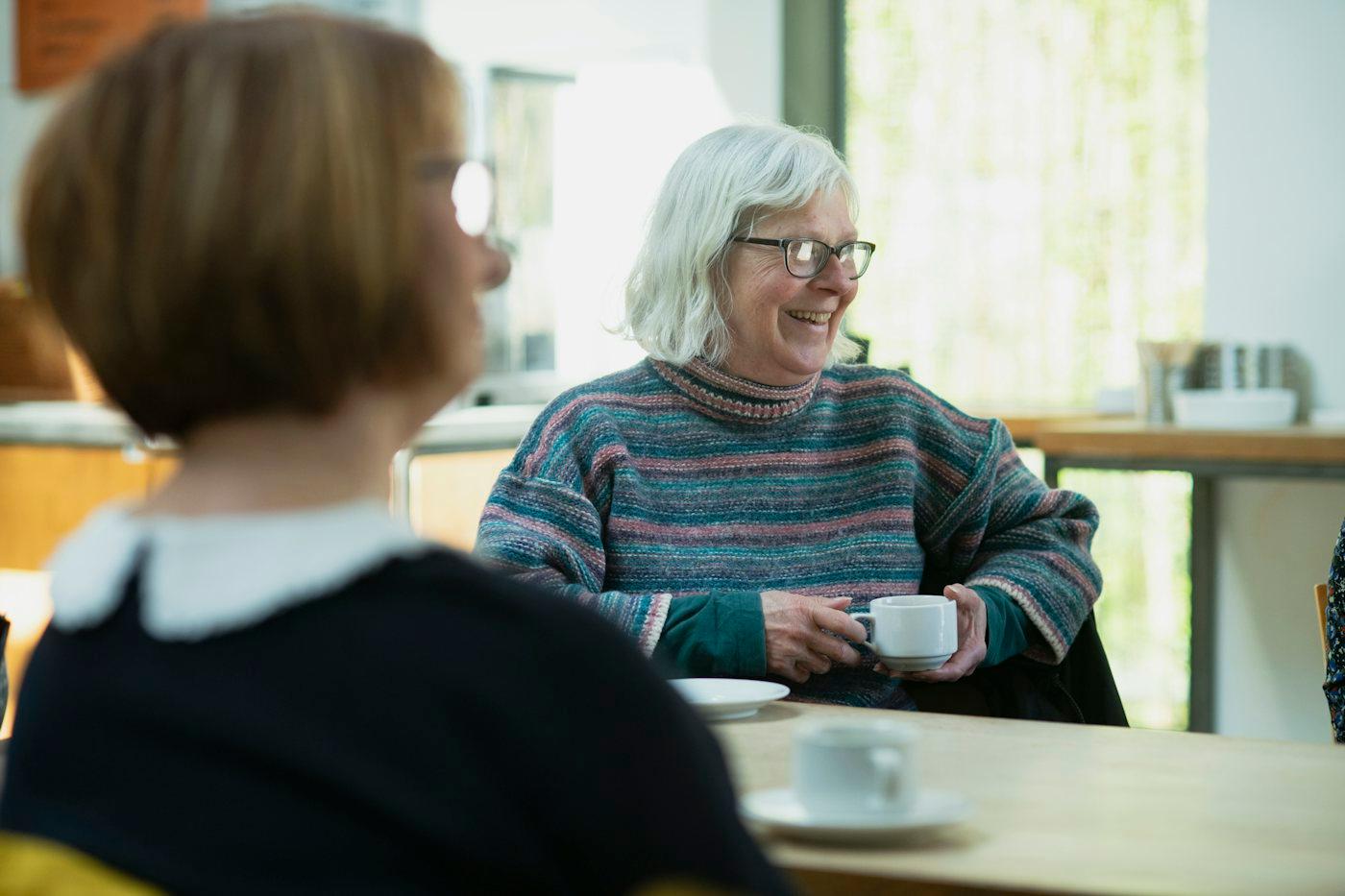
Here’s the hopeful part. In experiments on trains and buses2, commuters who were asked to talk to a stranger expected it to be awkward. Afterwards, they reported a more pleasant journey than commuters who sat in silence. Most of us think others don’t want to talk. Most of the time, we’re wrong.
Small steps that help
1. Go back to the same place
The same café, class or running group, week after week. Familiar faces turn into hellos, and hellos into conversations.
2. Do something together
Talking face to face can feel intense. Doing something side by side, like a walk, a run or cooking, makes it easier and gives you something to talk about.
3. Be the one who follows up
“That was fun. Same time next week?” Someone has to send it. It might as well be you.
4. Ask for help if it’s heavy
If loneliness feels heavy or goes on for a long time, talk to your doctor or someone you trust. You don’t have to fix it alone.
Where to start in a new city
The trick is to find places where the same people show up again and again. A few that work well:
- A weekly class: a language course, pottery, a dance class. Same group, same time, a built-in reason to talk.
- A running or cycling club. Many have a free weekly social run, and nobody expects you to be fast.
- A sports club. In Germany a Verein, in the Netherlands a vereniging: cheap, local, and full of regulars.
- Volunteering, where you meet people while doing something useful.
- A language exchange or board game evening at a café. Low pressure, and the game does half the talking.
A simple weekly plan
Big resolutions (“I’ll make five new friends this month!”) tend to fizzle. A small weekly rhythm works better:
- One repeat: go back to something you did last week, so faces become familiar.
- One new thing: try one new place, class or event.
- One follow-up: message one person you met. A link, a question, “are you going on Thursday?”.
That’s it. Three small actions a week add up to dozens of contacts over a few months. Read more in how to make friends as an adult.
What to actually say
Openers don’t need to be clever. Most good conversations start with something boring:
- “Is this your first time here too?”
- “How long have you been coming?”
- “What got you into this?”
- “I just moved here, any tips for a good café nearby?”
And when it went well, make the next step concrete. “We should hang out sometime” rarely happens. “I’m going again next Tuesday, want to come along?” often does.
A reason to meet every week
Pactful pairs you with someone who’s working on a similar goal, chosen by a real person, ideally in your city. You meet regularly about something you both care about, and friendship often follows.
Got a goal? Let’s find the person who helps you make it happen.
Find my goal buddy →Or just say hi, or write to hello@pactful.net
Sources
We checked these sources ourselves. Where a study is small or not peer-reviewed, we say so.
- Holt-Lunstad, J., Smith, T. B., & Layton, J. B. (2010). Social relationships and mortality risk: A meta-analytic review. PLoS Medicine, 7(7), e1000316. doi.org/10.1371/journal.pmed.1000316Based on observational studies. The “50%” is an odds ratio of 1.5.
- Epley, N., & Schroeder, J. (2014). Mistakenly seeking solitude. Journal of Experimental Psychology: General, 143(5), 1980–1999. doi.org/10.1037/a0037323
Know someone who needs this?
Send it to a friend, or put it in your story.
The Instagram button makes an image for your Instagram or WhatsApp story. On a computer, it downloads.